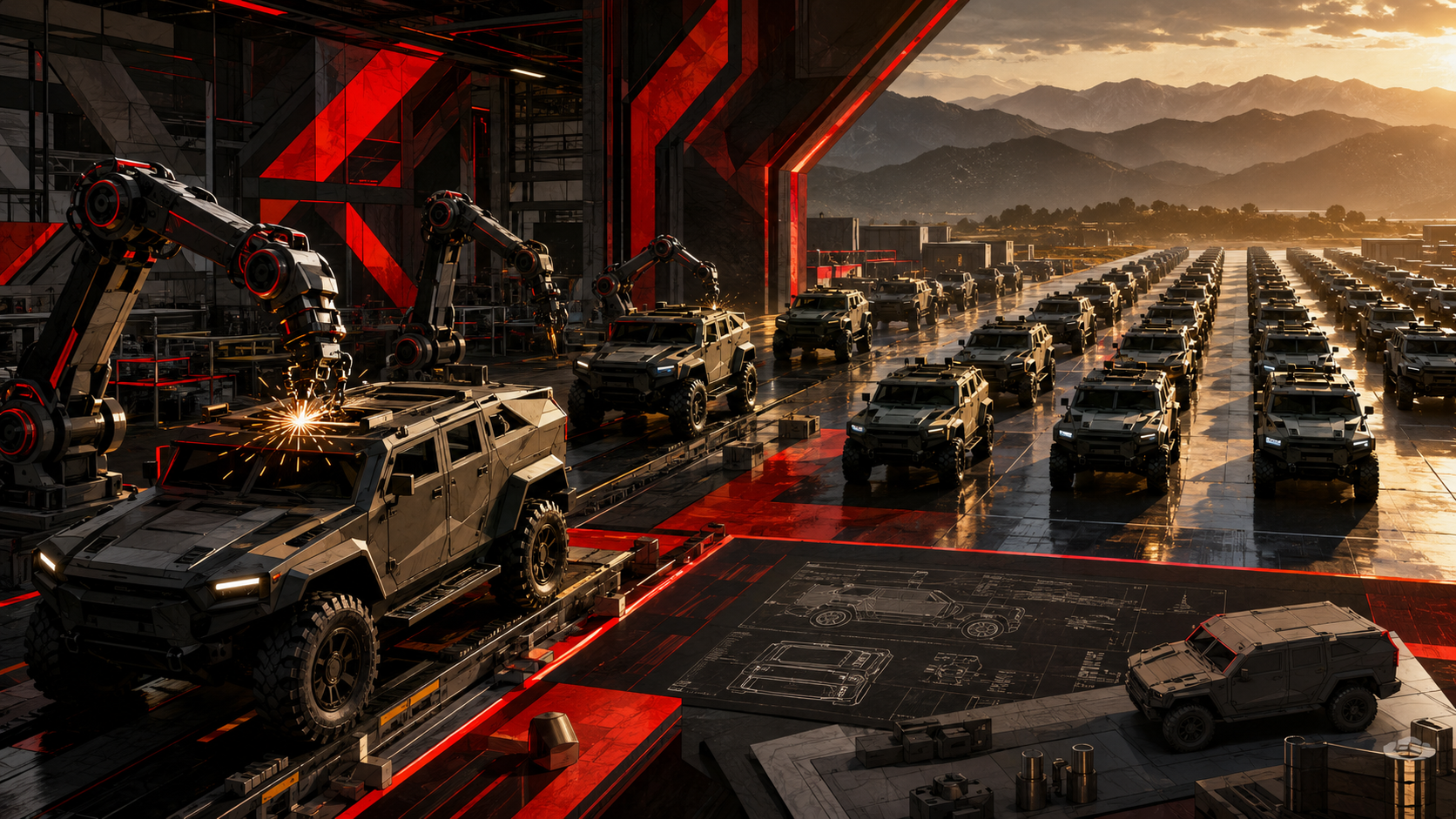
THE FIRST DELIVERY OF A LOCALLY PRODUCED FLEET
Albania's armed forces received 40 tactical vehicles produced in the country by Timak Defence on 31 July 2026. The Prime Minister's Office said the vehicles were made to NATO standards and described the handover as the first fleet to emerge from Albania's developing defence industry.
This is an industrial and logistical development, not only a symbolic ceremony. For the first time, a complete series of vehicles for the military has been produced and assembled in Albania through a model linking private manufacturer Timak Defence with KAYO, the state-owned company established for partnerships in the defence sector.
WHAT HAS BEEN CONFIRMED
The official source confirms the number of 40 vehicles, their delivery to the armed forces and their production in Albania. It also explains that Timak works with major automotive-industry companies: certain parts are supplied through those agreements, while final production and assembly take place in the country.
That distinction matters. The vehicles should not be misrepresented as a platform designed and produced entirely from scratch using only Albanian components. What has been verified is the creation of domestic capacity for production, integration, assembly and maintenance in cooperation with foreign partners.
WHY IT MATTERS FOR THE ECONOMY AND DEFENCE
Domestic production can reduce reliance on fragmented overseas purchases and create a more stable maintenance base. For the military, this has practical value: parts availability, repair capacity and fleet standardisation directly affect operational readiness.
For the economy, the sector could generate demand for engineering, metal processing, electronics, logistics and technical services. Its long-term value, however, will be measured not only by the number of vehicles delivered, but by contract transparency, the real share of work completed locally, maintenance quality and the ability to secure further orders.
WHAT COMES NEXT
According to the announcement, the government's objective is for the armed forces to meet their vehicle and wider capability needs by 2028. The Prime Minister's Office also said Timak is producing 14 fire engines, indicating that the industrial model is intended to extend beyond the tactical fleet.
Claims about international orders and additional projects will still need to be measured against contracts, deliveries and verifiable results. The handover of the 40 vehicles is already a concrete fact: Albania has moved from an ambition for a defence industry to a product delivered for institutional use.